



In the setup and engineering procurement of a commercial asphalt mixing plant, having a stable, safe, and affordable power supply is the foundation of smooth production. When setting up this category of heavy machinery, many plant managers forget one important step: properly sizing the electrical transformer. If the power requirement is not calculated correctly, the plant often faces power shortages after equipment arrives, leading to costly delays and possible damage to machines.
According to electrical engineering standards from National Electrical Manufacturers Association (NEMA) and Institute of Electrical and Electronics Engineers (IEEE), proper transformer sizing follows a simple two-step process: first calculate the total equipment power, then apply for a transformer with 10% to 15% extra capacity as safety margin. Because a modern asphalt facility represents one of the most power-intensive configurations in heavy industry, this specialized sizing rule establishes a gold standard—the precise formulas and headroom principles that work for an asphalt plant apply perfectly to all other types of large-scale industrial mixing facilities and heavy manufacturing equipment to safeguard local power grids.
CONTENTS
- 1. What is Total Equipment Power in Asphalt Mixing Plants?
- 2. What is Transformer Capacity and How to Apply for It?
- 3. Quick Reference Table: Transformer Capacity Sizing & Core Parameters
- 4. Why Do Industrial Plants Require a 10%–15% Transformer Headroom?
- 5. Technical Engineering Solutions for Sizing Power Configuration Plans
- 6. Summary Video: 1-Minute Power Sizing & Transformer Application Guide
- 7. Conclusion
What is Total Equipment Power in Asphalt Mixing Plants?
Total Equipment Power (also called total connected load) is the sum of the power ratings of all motors, heaters, and electrical equipment in your plant when running at full load.
According to International Electrotechnical Commission (IEC) standard 60034-1, the power value written on the equipment nameplate is the maximum continuous power the machine can safely deliver. For a professional asphalt batching plant, you need to add up the rated power (in kW) of these main parts:
- Main Mixing Motors: The primary high-torque electric motors responsible for driving the twin-shaft pugmill mixer under heavy aggregate loads.
- Burner Systems: The heavy-duty electrical combustion blowers, fuel supply pumps, and pre-heating elements utilized to fire the primary aggregate dryer drum.
- Conveyor Systems: All inclined drag slats, cold feed belt conveyors, aggregate weighing belts, and vertical bucket elevators used for material transferring.
- Dust Collection Systems: The high-power main exhaust fans and baghouse pulse-jet cleaning mechanisms required for global environmental compliance.
The mathematical formula for establishing this electrical baseline is:
Total Equipment Power (kW) = Sum of (Power of Motors + Power of Burners + Power of Conveyors + Power of Dust Systems)
What is Transformer Capacity and How to Apply for It?
Transformer Capacity is defined as the maximum apparent power output that an electrical transformer can continuously deliver to a load without exceeding its designed temperature rise limits. It is measured in Volt-Amperes (VA) or Kilovolt-Amperes (kVA).
When applying to local utility grids for industrial transformer capacity to support a newly deployed bitumen mixing plant, engineering guidelines from the American National Standards Institute (ANSI) dictate that you cannot simply match the transformer capacity directly to the calculated Total Equipment Power. Instead, you must apply a safety scaling factor to reserve a mandatory 10% to 15% headroom (also referred to as engineering cushion or capacity reserve).
To convert the calculated equipment power (kW) to the required transformer capacity (kVA), engineers utilize the power factor (typically 0.85 to 0.90 for industrial plants) and multiply by the safety factor. The core engineering formula for transformer sizing is expressed as follows:
Transformer Capacity (kVA) ≥ [Total Equipment Power (kW) ÷ Power Factor] × (1.10 ~ 1.15)
To simplify the preliminary assessment, operators often use the standard capacity estimation formula:
Transformer Capacity = Total Equipment Power × (1.2 ~ 1.3)
Step-by-Step Engineering Sizing Example: The ACE Group BAP1000 Plant
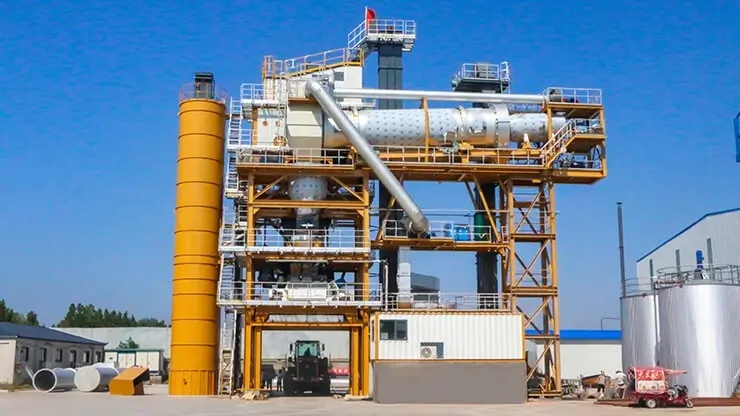
To demonstrate how these rules apply in a real-world infrastructure scenario, we can analyze the technical parameters of the flagship BAP1000 Asphalt Mixing Plant (80 T/H) engineered by ACE Group:
Baseline Parameters: According to the official ACE Group technical specifications, the total Installation Power required for a standard configuration BAP1000 batch mix plant is exactly 240 kW.
Calculation Using Scaling Factors:
240 kW × 1.2 = 288 kW
240 kW × 1.3 = 312 kW
Target Transformer Capacity to Apply For: For an ACE Group BAP1000 plant, the site infrastructure team should apply for a transformer capacity rating between 288 kVA and 312 kVA to ensure operational stability.
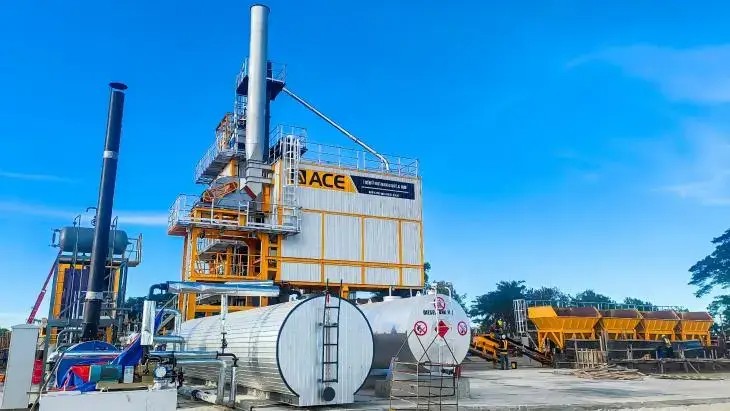
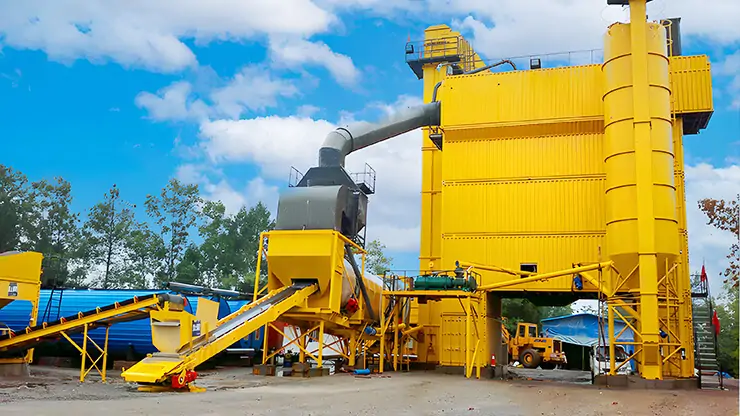
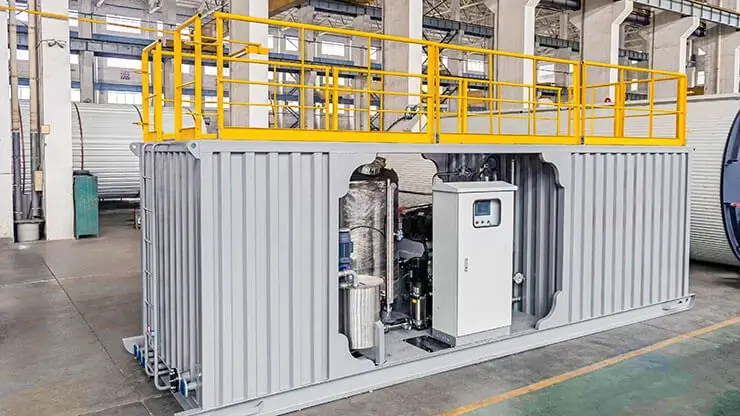
Model: BAP60 ~ BAP400
Production Capacity : 60t/h ~ 400t/h
Mixer Capacity: 750kg ~ 5000kg
Total Power: 178kW ~ 960kW
Dust Emission: ≤20 mg/μm³
Quick Reference Table: Transformer Capacity Sizing & Core Parameters
To help plant engineers and project supervisors quickly estimate power requirements and understand the technical relationships between connected loads and power distribution, the following table outlines standard industrial configurations:
| Total Equipment Power Baseline | Recommended Headroom Margin | Required Transformer Capacity Range | Primary System Risks if Undersized |
|---|---|---|---|
| 200 kW | 10% – 15% | 240 kW – 260 kW | Voltage drops, control system resets, localized overheating |
| 500 kW | 10% – 15% | 600 kW – 650 kW | Main breaker tripping during startup, thermal aging of insulation |
| 800 kW | 10% – 15% | 960 kW – 1040 kW | Severe inrush current damage, power supply blackouts |
| 1200 kW | 10% – 15% | 1440 kW – 1560 kW | Total grid non-compliance, catastrophic transformer failure |
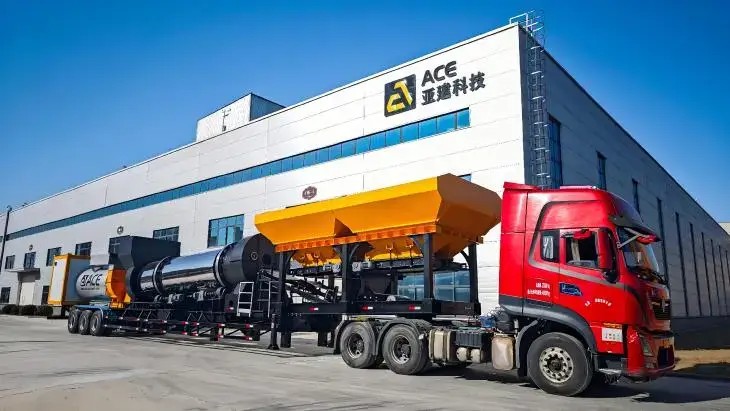
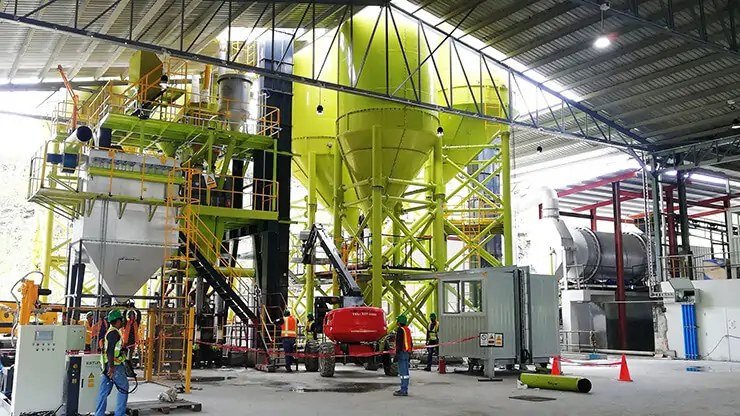
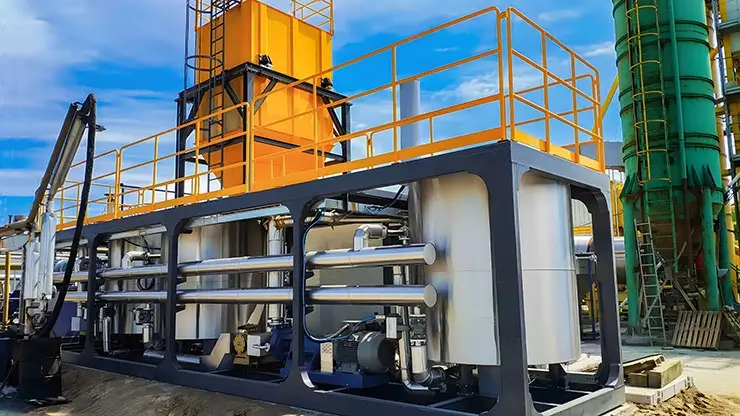
Model: IAP40 ~ IAP120
Capacity: 40t/h ~ 120t/h
Drying & Mixing Drum: Φ1200*5000mm ~ Φ1800*8000mm
Air Emissions: ≤100 mg/Nm³
Installation Power: 63.55 kW ~ 226 kW
Why Do Industrial Plants Require a 10%–15% Transformer Headroom?
This extra capacity is not a waste of money — it is necessary for safe and smooth operation. Two main reasons:
- Handling Startup Surge (Inrush Current): When big motors start, they can draw 5 to 6 times more current than normal for a short time. Even with soft-starters or VFDs, the total surge is still very high. Without extra capacity, this causes voltage drops, breaker trips, and unstable power.
- Future Expansion: Your plant will grow in the future. You may want to add more conveyors, upgrade the dust collector, or increase production. Having 10–15% extra space now allows you to expand easily without changing the transformer later.
Technical Engineering Solutions for Sizing Power Configuration Plans
Overcoming power supply instabilities and avoiding transformer overloads requires a proactive, systematic planning framework during the early equipment selection phase. Instead of relying on guesswork, project managers should implement a structured operational strategy based on three practical engineering guidelines:
- Work with a qualified electrical engineer from the beginning to match your plant's wiring with the local grid requirements.
- Install VFDs or soft-starters on large motors to reduce startup current.
- Regularly check transformer temperature and power quality using thermal cameras and power analyzers.
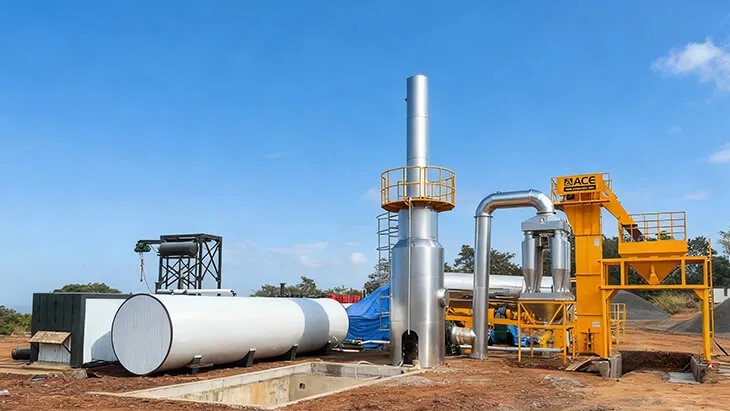
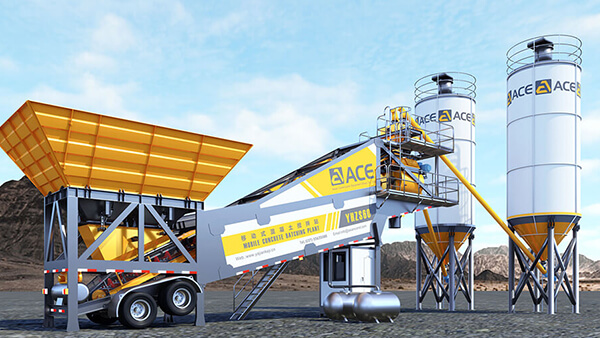
Model: DAP40 ~ DAP240
Capacity: 40t/h ~ 240t/h
Total Power: 75kW ~ 473kW
Measurement Accuracy(Aggregate): ±1.5%
Measurement Accuracy(Bitumen): ±1%
Summary Video: 1-Minute Power Sizing & Transformer Application Guide
Prefer a short explanation? Watch our 1-minute video guide that shows how to calculate total power and apply for the right transformer capacity.
Conclusion
For a reliable and high-performing infrastructure project, everything depends on a stable power configuration. By correctly calculating your total equipment power across your mixing, burning, and dust collection systems, considering the high 5x to 6x startup currents, and keeping 10%–15% extra transformer capacity, you will completely avoid power shortages, protect your hardware assets, and keep your production running smoothly every day.
Only when your transformer capacity is properly sized can your plant achieve optimal daily output, longer equipment life, and safer operation. Because these rules are proven under the intense demands of hot mix asphalt production, they provide the ultimate blueprint for any large-scale industrial mixing project. For global buyers looking for highly secure and energy-optimized road machinery, exploring the engineered models at ACE Group is the first step toward long-term project success.